Break In Faux Leather Dr. Martens Without Cracking
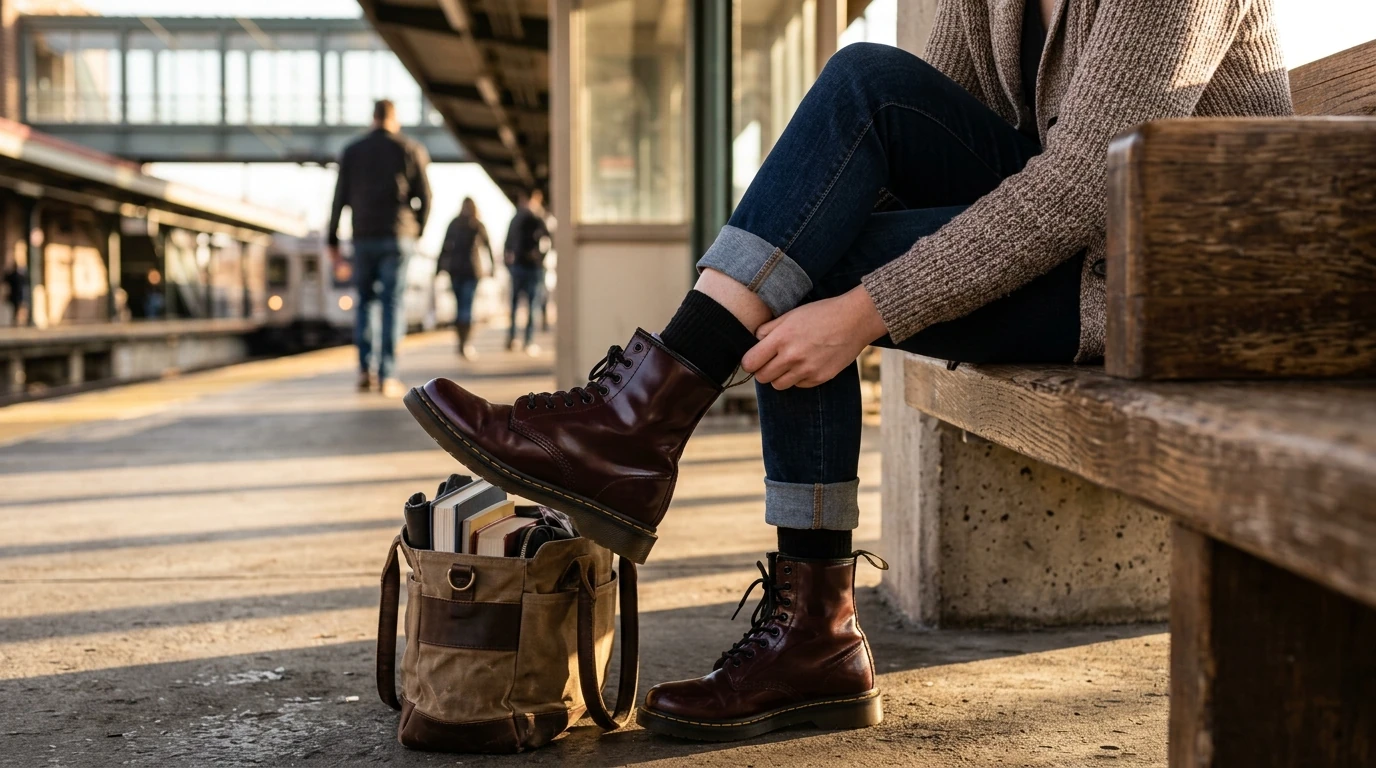
How can I soften and break in faux leather Dr. Martens boots without cracking the material?
Faux leather Dr. Martens can feel stiff at first, but the goal is to loosen them gradually without drying out or stressing the surface. Because faux leather has a coated finish, heavy oils, heat blasts, and aggressive bending can lead to creasing or cracking over time. A slow, low-friction break-in routine works best.
Start with short, controlled wears
Wear the boots indoors for 20–40 minutes at a time with thicker socks, then let them rest. Repeat over several days. This flexes the boot naturally at your stride points without forcing sharp folds that can damage the coating.
Use gentle stretching, not high heat
If the toe box or instep feels tight, use a shoe stretcher (or stuff the boot firmly with socks) for a few hours at a time. Avoid hair dryers, heaters, or leaving them in a hot car—high heat can make faux leather brittle and more prone to cracking.
Reduce friction at the pressure spots
To prevent painful rubbing while the material relaxes, apply blister patches or moleskin to your heel and ankle, or add a gel heel liner inside the boot. This protects your skin and keeps you from over-flexing the boot in an attempt to “power through” the break-in.
Condition carefully (only if the product is faux-leather safe)
Many leather conditioners and oils are not designed for faux leather and can weaken adhesives or leave a tacky film. If you want extra softness, use a conditioner specifically labeled safe for synthetic/faux leather and test it on a small hidden area first. Apply a light layer, buff gently, and never saturate seams.
Keep them clean and supported
Wipe the boots with a slightly damp cloth after wear and let them air-dry away from direct heat. Store them upright or with shoe trees so the upper keeps its shape and doesn’t collapse into harsh creases.
For more fit and care tips tailored to women’s faux leather Docs, visit the full guide here: https://marvellene.com/guide-dr-martens-womens-faux-leather-boots-fit-care-style/.
FAQ
How do you clean faux leather Dr. Martens without damaging the finish?
Wipe with a soft damp cloth and a tiny amount of mild soap if needed, then wipe again with clean water. Air-dry at room temperature and avoid harsh cleaners or scrubbing pads that can dull the coating.














Leave a comment