Why Faux Leather Boots Crack and What You Can Do
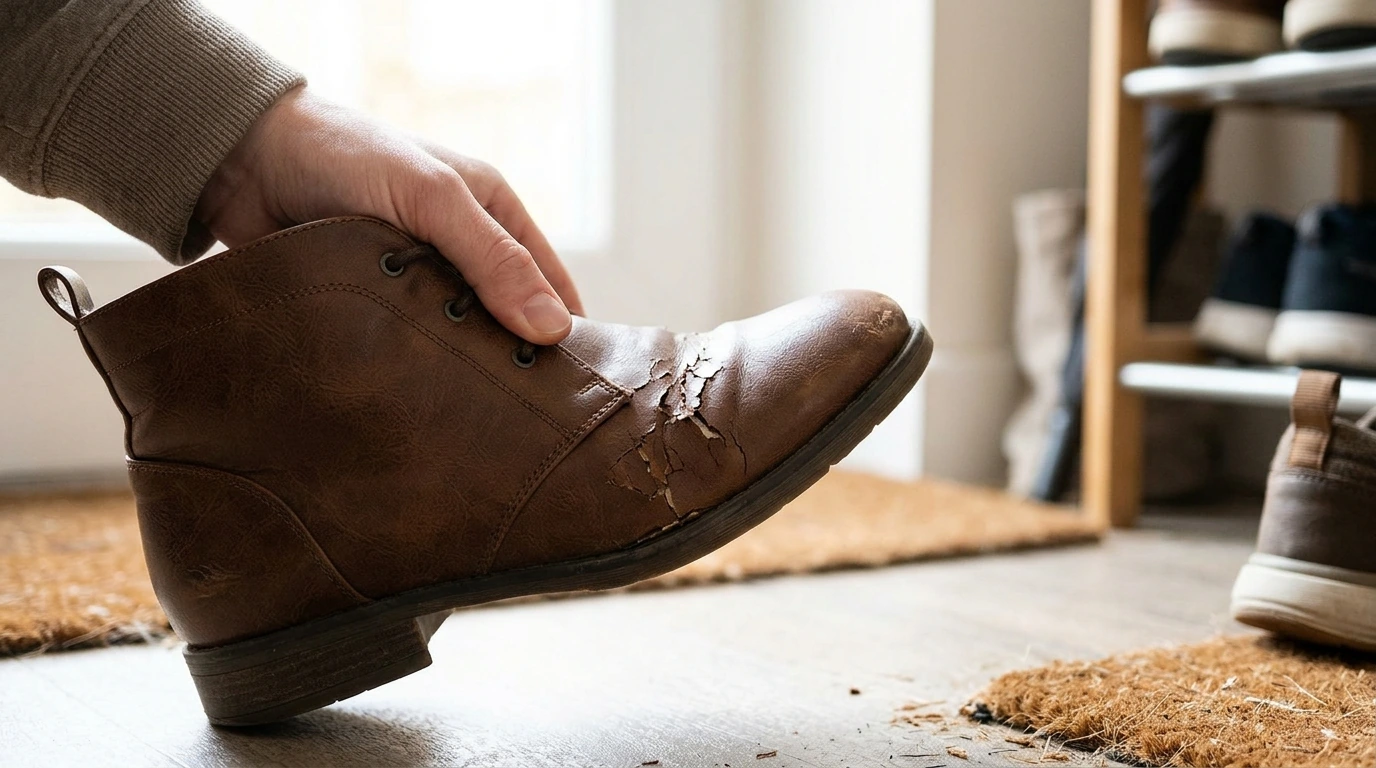
Why are my faux leather boots cracking?
Faux leather boots usually crack when their surface coating loses flexibility. Each step bends the material, especially across the toes and around the ankles. Over time, that repeated movement can create fine lines that widen into cracks or peeling. Heat, moisture, friction, and harsh cleaning products can speed up the damage.
Cracking does not always mean you neglected your boots. Faux leather has a limited lifespan, and its coating may eventually break down even with careful wear. Our goal is to help you slow that process and recognize when a repair is worth trying.
What causes the cracks?
Look at where the damage starts. Cracks across the toe crease often come from repeated bending; damage at the back of the heel may be caused by rubbing as you put the boots on. Boots stored near a heater or in direct sunlight can dry out or become brittle. Leaving them damp after rain can also stress the finish and the layers beneath it.
Household cleaners, alcohol, and products made for genuine leather can damage some faux leather finishes. Heavy coats of oil or leather conditioner are not a reliable fix: faux leather does not absorb them the way natural leather does, and residue may make the surface sticky.
Can you prevent more cracking?
After wearing your boots, wipe away dirt with a soft, slightly damp cloth, then let them air-dry at room temperature. Keep them away from radiators and other direct heat sources. Store them upright or gently supported so the shafts do not fold into sharp creases.
If you use a cleaner or protectant, choose one labeled for your boots’ synthetic material and test it on a small, hidden area first. Rotate pairs when you can, giving damp boots time to dry between wears. For more everyday wear and care guidance, visit our guide to women’s faux leather boots.
What should you do with boots that are already cracked?
Clean and dry the area before deciding on a repair. A flexible product intended for synthetic uppers may improve the appearance of small surface cracks, but it will not restore the original coating. If the material is peeling widely or the sole is separating, consider a professional repair assessment or replacement. Avoid wearing boots with damage that affects their support or lets water in.
FAQ
Can you use leather conditioner on faux leather boots?
We do not recommend using a conditioner made for genuine leather unless its label also says it is suitable for your boots’ synthetic material. Faux leather does not absorb conditioner like natural leather, and the product may leave a sticky residue or affect the finish.













Leave a comment