Best Care for Dry, Flaky Skin on Your Face
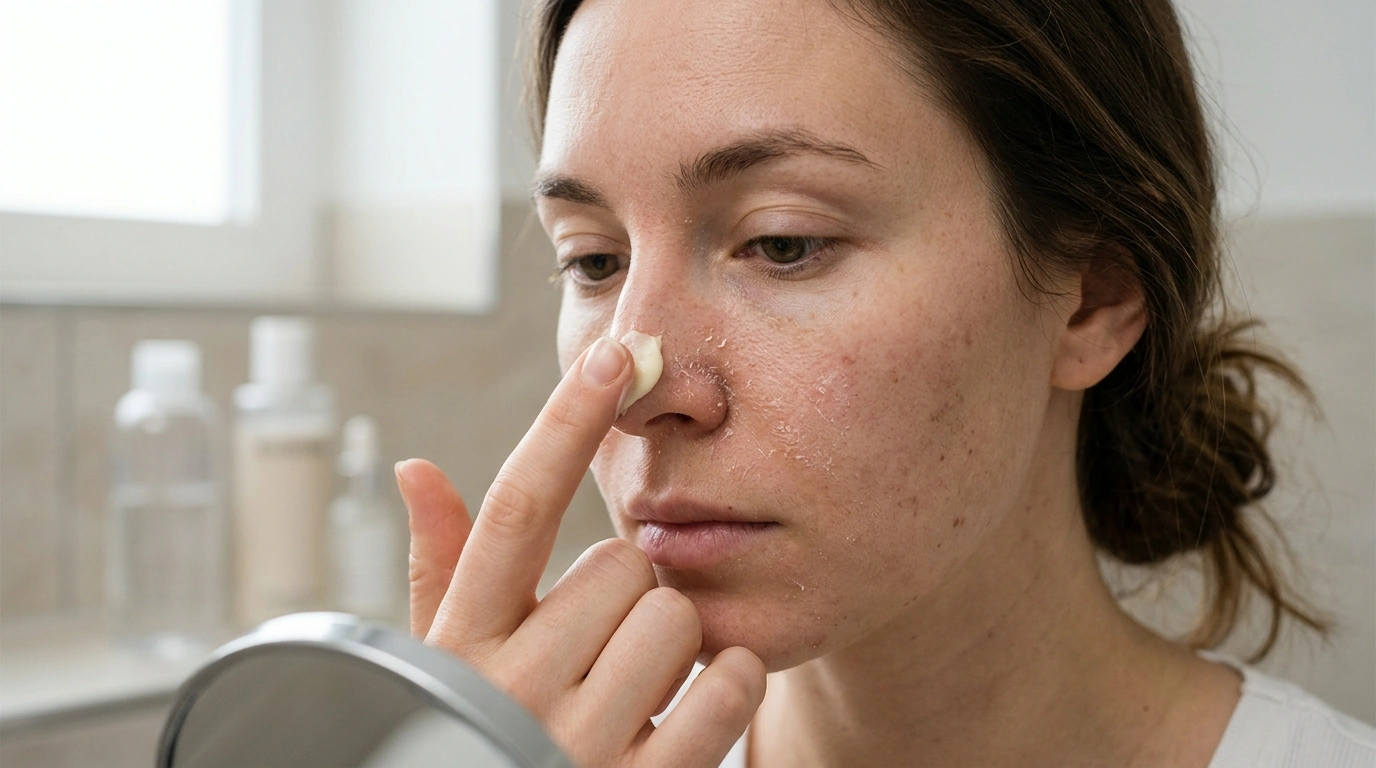
What is the best thing for dry, flaky skin on your face?
The best first step is a gentle, fragrance-free moisturizer applied to damp skin. Look for a cream or ointment with ingredients such as glycerin, hyaluronic acid, or ceramides, which help draw in moisture or support the skin barrier. If your face feels tight or flaky, a richer cream is often more comfortable than a lightweight lotion.
We recommend keeping the rest of your routine simple while your skin recovers. Harsh cleansers, hot water, and frequent exfoliation can make dryness worse, even when you are trying to smooth away flakes.
How should you care for a dry, flaky face?
Cleanse gently
Wash with lukewarm water and a mild, fragrance-free cleanser. Avoid scrubbing with washcloths or facial brushes. If cleansing twice a day leaves your skin feeling tight, try rinsing with water in the morning and using cleanser at night.
Moisturize while skin is damp
Pat your face gently, then apply cream before your skin dries completely. Use enough to cover your face comfortably, and reapply to dry areas as needed. For stubborn patches, a thin layer of petroleum jelly over your moisturizer at night can help seal in moisture. Keep it away from your eyes.
Protect your skin during the day
Finish your morning routine with a broad-spectrum sunscreen rated SPF 30 or higher. If sunscreen stings, try a fragrance-free mineral formula with zinc oxide or titanium dioxide. Cold weather and dry indoor air can also contribute to tightness, so a humidifier may help.
Should you exfoliate flaky skin?
Not while your skin is irritated. Pause exfoliating acids, facial scrubs, and retinoids until the dryness settles. Once your skin feels comfortable again, reintroduce products slowly, one at a time. If a product repeatedly causes burning or peeling, stop using it.
For a practical morning and evening checklist, see our guide to a dry-skin routine for flakes and tightness.
When should you get help?
See a dermatologist if flakes persist despite gentle care, or if you have significant redness, itching, cracking, or pain. Flaking around the nose, eyebrows, or hairline can have causes beyond ordinary dryness and may need different treatment.
FAQ
Can you use petroleum jelly on your face every night?
Yes, many people can use a thin layer over moisturizer at night, especially on dry patches. If it feels uncomfortable or seems to worsen breakouts, use it only on the driest areas or choose a rich cream instead.
















Leave a comment