Calm Your Dog for Grooming: Safe Options That Work
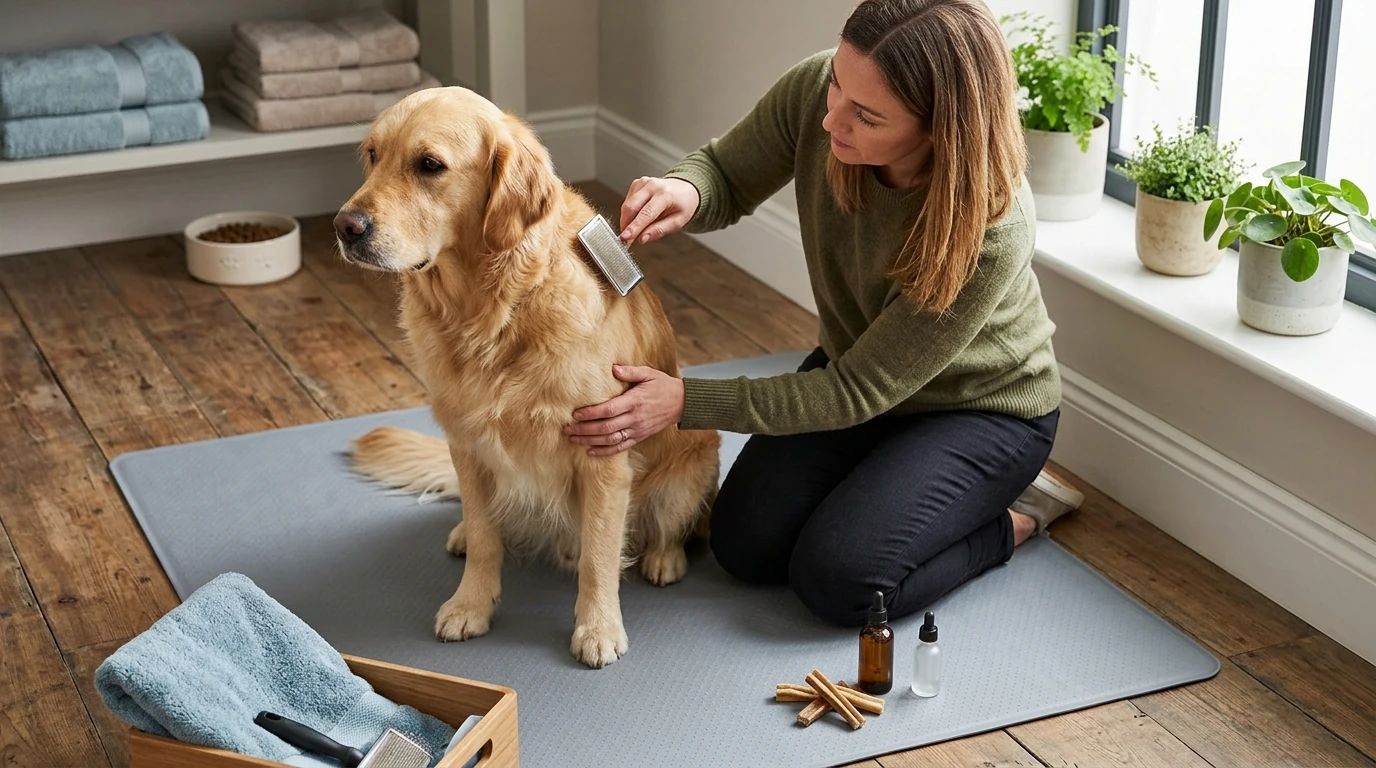
What can I give my dog to calm her down so I can groom her?
If your dog gets wiggly, worried, or reactive during grooming, the safest “something to give” usually starts with non-drug options you can use right away at home. Our team recommends building a calming setup first, then adding gentle aids only when needed.
Start with low-risk calming tools (no pills required)
Before reaching for a supplement, try a lick mat or stuffed food toy to keep her busy while you brush or trim. High-value treats delivered continuously (tiny pieces, one after another) can reduce tension. Many dogs also settle with a snug-fitting calming wrap or anxiety shirt, plus a non-slip grooming mat so they feel steady underfoot.
Over-the-counter calming aids you can ask your vet about
If you want something ingestible, common options include L-theanine, alpha-casozepine, and calming probiotic chews designed for stress. These are typically used daily or before predictable events. Another approach is pheromone support (sprays, diffusers, or collars) that can be started 15–30 minutes before grooming.
Because dogs vary by age, size, and medical history, keep it simple: choose one product category at a time and avoid stacking multiple calming chews, hemp products, or sedating antihistamines without veterinary guidance.
When prescription help is the right call
If she panics, snaps, or can’t be handled safely, talk with your veterinarian about a short-term pre-groom medication plan. Prescription anxiolytics or mild sedatives can be safer and more predictable than experimenting at home—especially for seniors or dogs with heart, liver, or seizure concerns.
Make grooming easier in the moment
Keep sessions short (2–5 minutes), end on a win, and do one body area per day. Use a quiet clipper, take breaks, and reward calm stillness. If your dog is older or sensitive, you’ll find more comfort-first steps in our guide: https://marvellene.com/guide-gentle-senior-pet-grooming-easy-comfort-tips/.
FAQ
How can I make grooming less stressful for an anxious dog?
Use a non-slip mat, keep the room quiet, and pair each grooming touch with continuous small treats or a lick mat. Work in brief sessions and stop before your dog escalates.













Leave a comment