Signs a Senior Dog May Be Nearing the End of Life
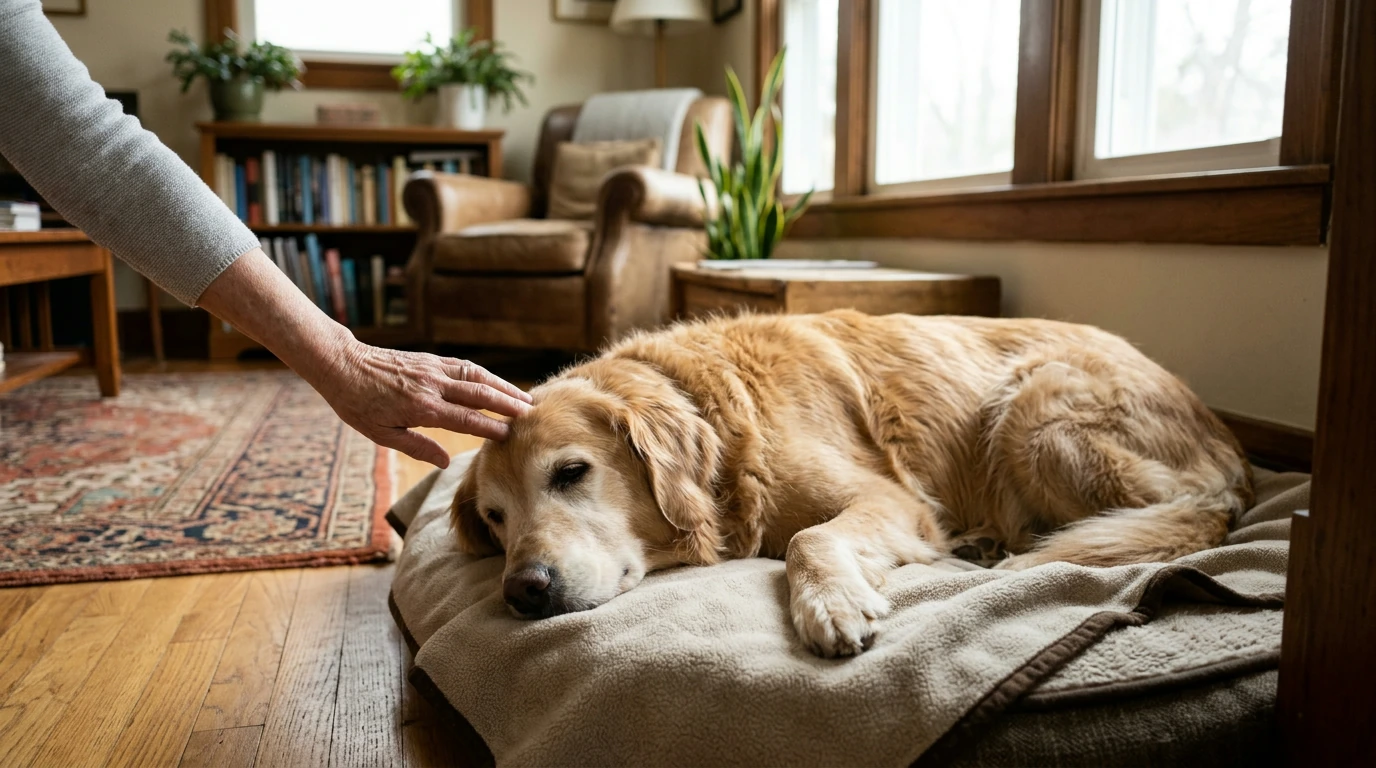
What are the signs that a senior dog is nearing the end of her life?
A senior dog nearing the end of her life may show changes in her appetite, movement, breathing, and interest in the people and activities she usually enjoys. These signs can develop gradually or appear suddenly. They do not always mean death is imminent: pain, infection, dehydration, and other treatable conditions can cause similar changes.
If you notice a significant change, contact your veterinarian. Our team encourages you to share what you are seeing so you can make a comfort plan together.
What physical changes might you notice?
Your dog may eat or drink less, lose weight, or have trouble swallowing. She may become weaker, struggle to stand or walk, or need help reaching her usual spots. Some dogs have accidents because they cannot get outside in time or have difficulty controlling their bladder or bowels.
Breathing can also change. You might notice a different rhythm or more effort than usual. Repeated vomiting, diarrhea, or difficulty keeping water down also deserves a call to your veterinarian.
How might her behavior change?
Your dog may seem withdrawn, confused, or less interested in greeting you, playing, or going for walks. Some dogs seek more closeness; others prefer less interaction. Restlessness, panting, trembling, vocalizing, or avoiding touch can be signs of pain or distress, even if she is quiet at other times.
Keep a simple record of her appetite, mobility, comfort, and enjoyment of daily life. Note whether good moments still outweigh difficult ones. This can help you and your veterinarian discuss quality of life and whether treatment or hospice care may help.
When does your dog need urgent veterinary help?
Seek emergency veterinary care if your dog has severe difficulty breathing, collapses, has a seizure, cannot urinate, or appears to be in severe pain. Pale, blue, or gray gums are also an emergency. Call ahead when possible so the clinic can prepare for your arrival.
How can you keep grooming gentle?
Choose a soft brush and work in short sessions, stopping if your dog pulls away or seems uncomfortable. Avoid tugging at mats or using scissors close to fragile skin; ask your veterinarian or a groomer experienced with senior pets for help. For more ways to make care comfortable, read our guide to gentle senior pet grooming.
FAQ
How can you talk to your veterinarian about euthanasia?
Ask your veterinarian to explain your dog’s prognosis, options for comfort care, and signs that suffering may be difficult to relieve. You can also discuss what happens during euthanasia and how to prepare for the appointment.
















Leave a comment