Stop Car Motion Sickness Without Medicine: 7 Tips
What are the most effective non-medication tips to prevent motion sickness in a car?
Motion sickness in a car usually comes from a mismatch between what your eyes see and what your inner ear feels. The most effective non-medication fixes reduce that conflict, keep your body steady, and lower triggers like heat and strong smells.
Choose the best seat and stabilize your head
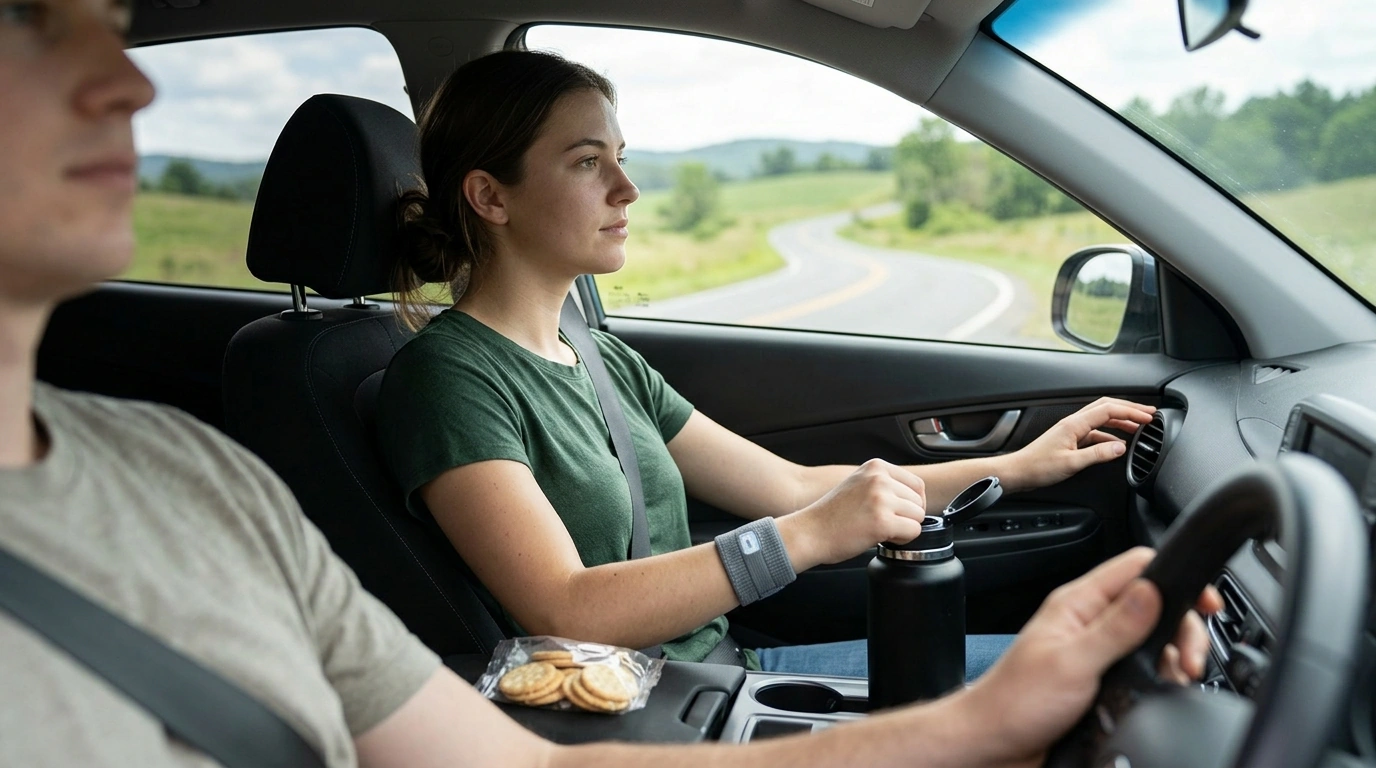
Sit in the front passenger seat when possible, where motion is typically smoother and the view forward is clearer. Keep your head supported against the headrest and avoid slouching; a steady head helps your balance system stay calmer.
Look at the horizon and limit close-up focus
Fix your gaze on the road ahead or the horizon rather than the dashboard or your phone. Avoid reading, scrolling, or any task that forces your eyes to focus close up—this is one of the fastest ways to trigger nausea.
Control airflow, temperature, and odors
Cool, fresh air helps. Crack a window or aim a vent toward your face, and keep the car comfortably cool. Skip heavy perfumes, strong air fresheners, and greasy foods before or during the ride, since odors and rich meals can make symptoms worse.
Drive smoothly and plan smarter breaks
If you’re driving, accelerate gently, brake early, and take curves slowly. For longer trips, build in short breaks to walk around and reset your senses—especially before symptoms snowball.
Try simple behavioral and food-based strategies
Stay hydrated with small sips of water. Light snacks like crackers can be easier than an empty stomach. Many people find ginger (tea, chews, or candy) helpful, and acupressure wrist bands are a low-risk option worth trying.
For a deeper dive and additional practical ideas, visit the full guide on preventing car motion sickness without medication.
FAQ
What helps motion sickness fast without medicine?
Look straight ahead at the horizon, get cool fresh air on your face, and stop reading or using screens. If you can, pull over for a brief walk and drink a few sips of water.
















Leave a comment