Do Air Purifiers Reduce Pet Hair? What They Really Do
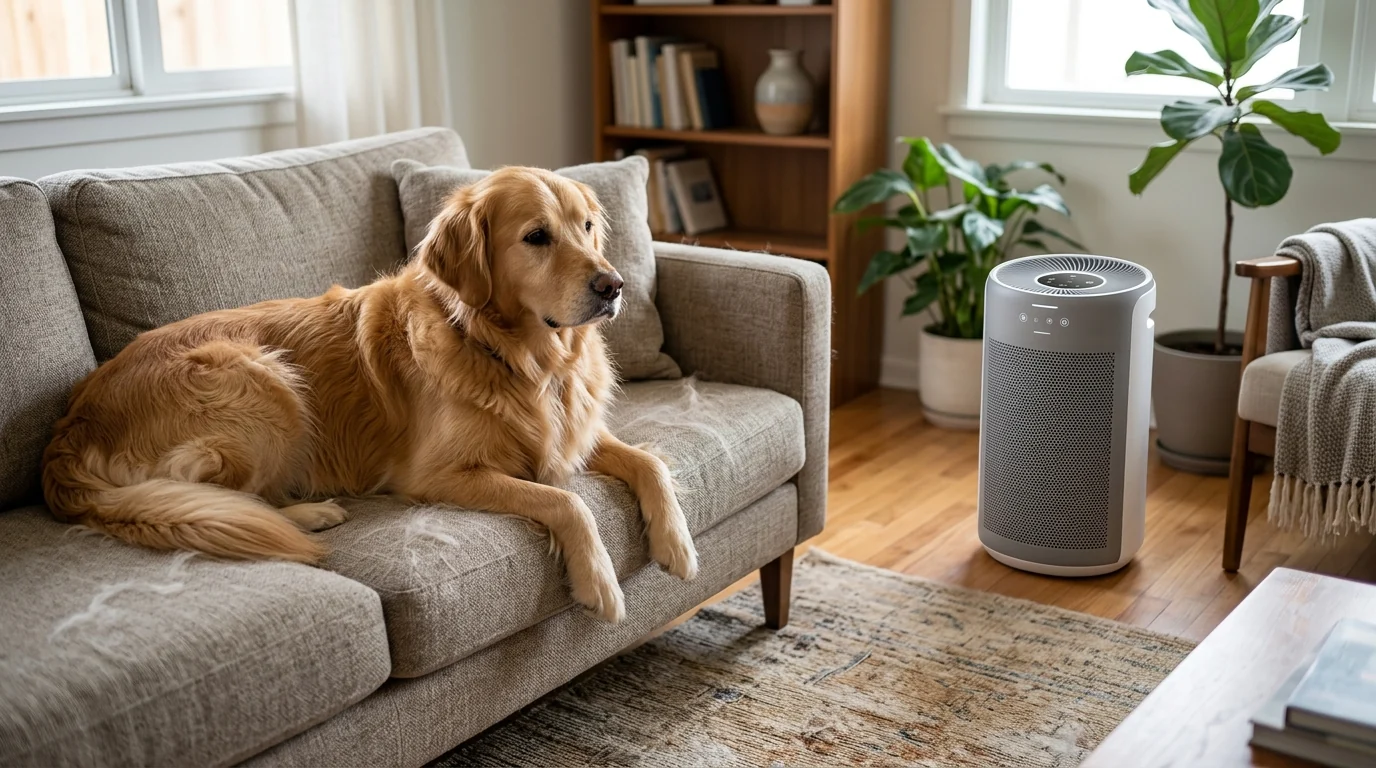
Do air purifiers reduce pet hair?
Air purifiers can reduce the amount of pet hair you see floating around, but they don’t “remove” hair that’s already settled on floors, furniture, or fabrics. What they do well is capture airborne hair fragments, dander, and lint that get kicked up when pets move around or when you vacuum. For many homes, that means fewer fuzzy tumbleweeds drifting across a room and less pet-related debris landing on surfaces.
How air purifiers help with pet hair
Most pet hair is relatively heavy and drops quickly. An air purifier helps most when hair becomes airborne—after brushing, playtime, or when HVAC airflow stirs it up. Choose a unit with a true HEPA filter (or equivalent) to trap fine particles that often travel with hair, like dander. A pre-filter is also important because it catches larger strands and fuzz first, helping the main filter last longer.
What to expect (and what not to expect)
An air purifier won’t replace vacuuming, sweeping, or using a lint roller. Think of it as a “between-cleaning” helper: it can cut down on airborne shedding and the dusty film that can build up in pet homes, but it can’t pull hair out of carpets or off couches. If hair buildup is heavy, improving your cleaning routine and grooming schedule will make a bigger difference than relying on filtration alone.
Tips for better results
- Place it where hair circulates: near the main living area or close to where your pet spends time (without blocking airflow).
- Size it correctly: match the purifier’s CADR/room rating to your actual room size.
- Maintain filters: clean or replace pre-filters regularly; clogged filters reduce performance.
- Pair with daily habits: consistent brushing, frequent vacuuming, and washable throws reduce the load the purifier has to handle.
For more practical, low-effort ways to keep shedding under control, visit the full guide: https://marvellene.com/guide-pet-hair-control-easy-routines-cleaner-home/.
FAQ
What’s the best way to keep pet hair off furniture?
Use washable slipcovers or throws, brush your pet frequently, and vacuum upholstery with a pet-hair attachment every few days. A slightly damp rubber brush or squeegee can also pull embedded hair off fabric quickly.














Leave a comment