Everyday Words and Phrases a 2-Year-Old May Say
What are some common phrases that 2-year-olds say?
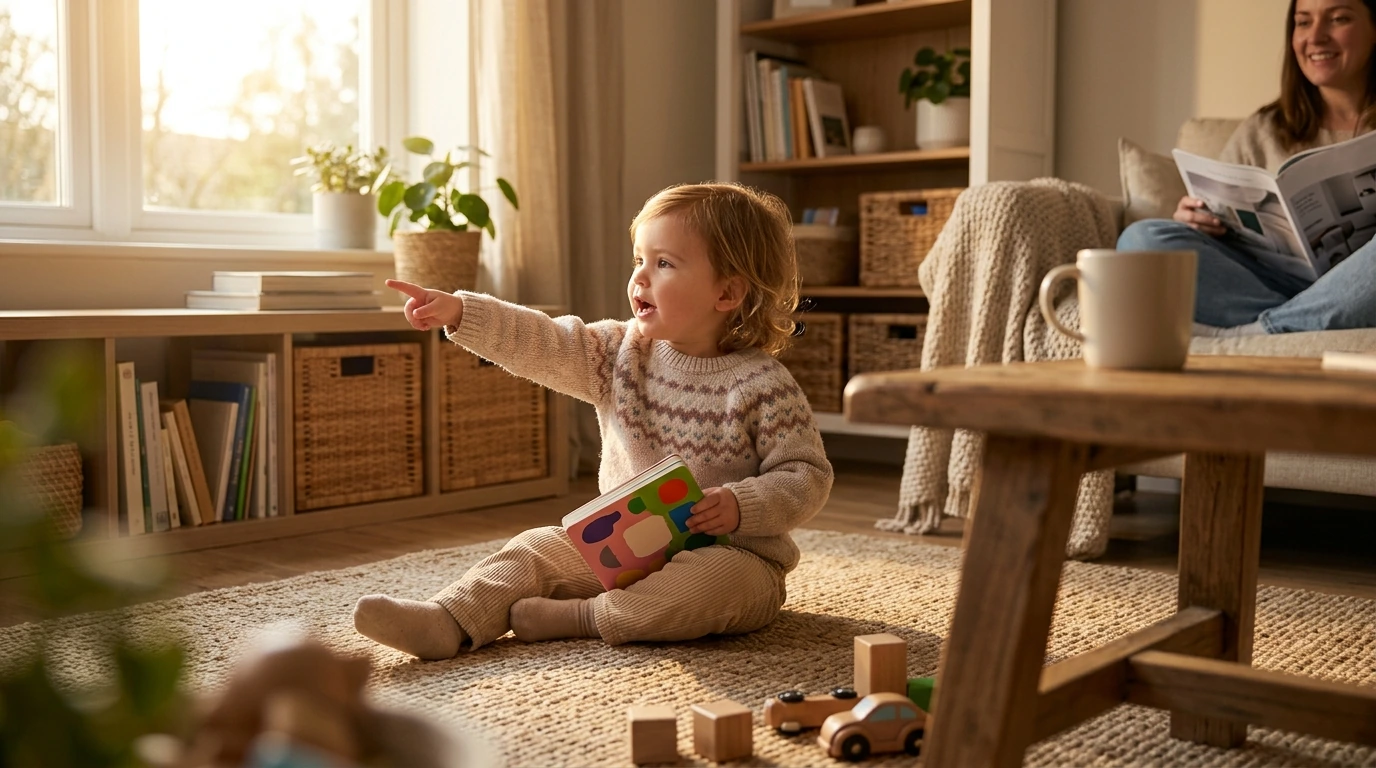
Two-year-olds often use short words and phrases to ask for things, share what they notice, and express big feelings. You may hear two-word combinations, familiar labels, or the same favorite phrase many times. Every child develops at their own pace, so these examples are possibilities—not a checklist.
Words for asking and choosing
Common requests include “more, please,” “want that,” “help me,” and “open it.” Your toddler might point while saying a word or use a short phrase such as “my cup” or “go outside” to show what they want. A gesture paired with a word can also communicate a clear message.
Words for people and things
You may hear names for family members, pets, foods, toys, and everyday objects: “Mama,” “doggie,” “ball,” or “banana.” Toddlers also start putting words together to describe what they see, such as “big truck,” “baby sleeping,” or “kitty up.”
Words for feelings and routines
Phrases like “no,” “all done,” “mine,” and “uh-oh” can help a 2-year-old express preferences or react to what is happening. You might also hear routine phrases such as “bye-bye,” “night-night,” or “wash hands.” Repeating a phrase is one way children practice using language in familiar situations.
How can you respond when your toddler talks?
Give your child time to finish, then respond to the meaning of their words. If your toddler says “more milk,” you could say, “You want more milk.” This models a slightly longer phrase without turning the moment into a test. Reading together, naming items during play, and chatting through daily routines give your child natural chances to hear and try words.
What if food-related phrases come up at mealtime?
“No,” “all done,” and “more” can be especially useful at the table. You can acknowledge what your toddler says while keeping mealtimes low-pressure. For practical ideas about food refusal and supportive responses, visit our guide to gentle reasons a toddler may not eat and what to do.
FAQ
How can I help my toddler learn new words during everyday routines?
Talk about what you and your child are doing, name familiar objects, and respond warmly when your toddler communicates with words or gestures. Short, simple phrases during play, meals, and getting dressed offer everyday opportunities to hear language.















Leave a comment