First Words Toddlers Often Say: Examples and Tips
What are some typical words that toddlers say?
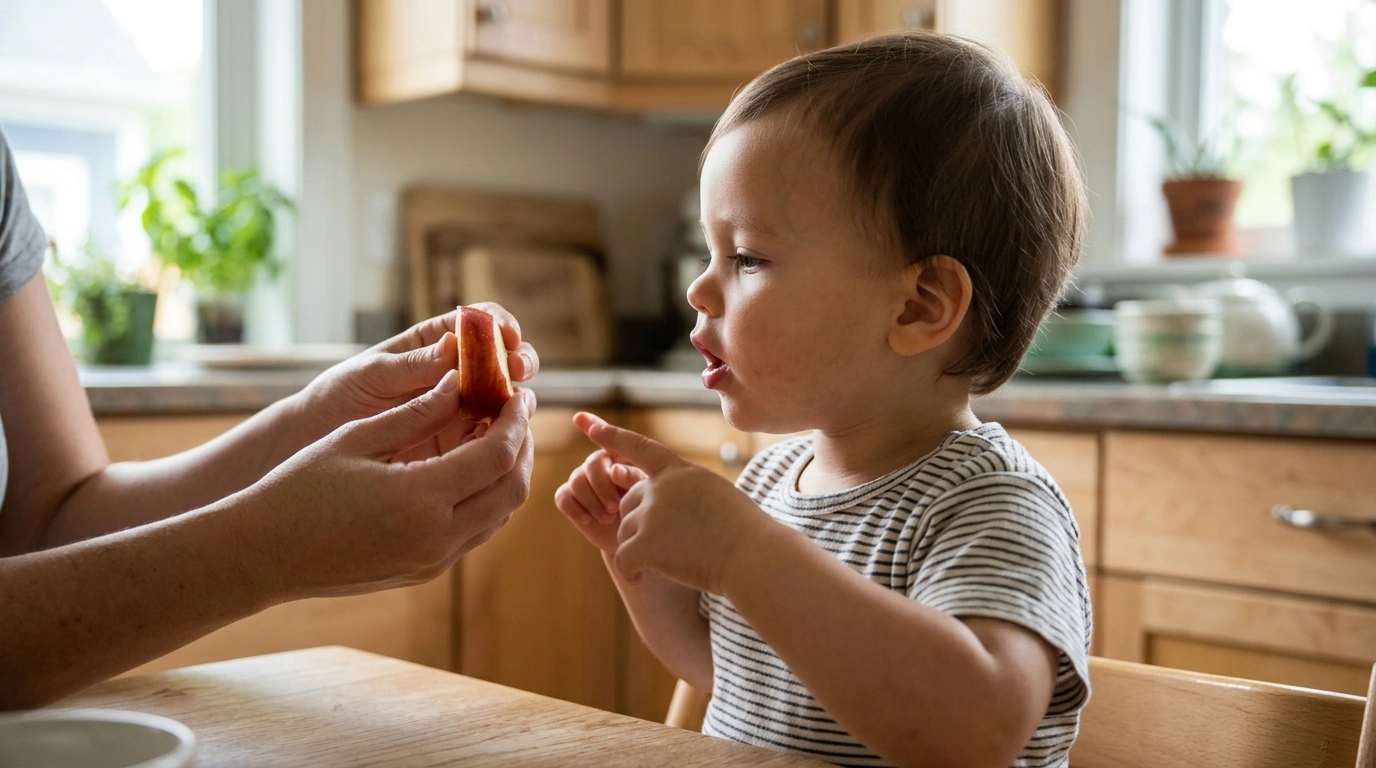
Toddlers often start with short, useful words they hear often and can connect to familiar people, objects, and routines. Common early words include “mama,” “dada,” “hi,” “bye,” “no,” “more,” “up,” “ball,” “car,” “dog,” “cat,” “milk,” “eat,” and “go.” A child may pronounce a word in their own way and still use it consistently to mean something.
Words depend on a toddler’s everyday world
There isn’t one required set of first words. A toddler who loves books might say “book,” while another may name a favorite toy, sibling, snack, or animal. Words for needs and routines—such as “help,” “water,” “all done,” or “sleep”—may also become familiar through repetition.
How toddlers use new words
At first, a word may stand for a whole idea. “Up” might mean “pick me up,” and “milk” may be a request for a drink. Toddlers also communicate with gestures, pointing, facial expressions, and sounds. These all help caregivers understand what a child is trying to say.
As vocabulary grows, toddlers may begin joining words together, often around age 2. You might hear combinations such as “more snack,” “go outside,” or “Mommy help.” Children develop at different rates, so these examples are common patterns, not a checklist or deadline.
Ways to encourage talking
Talk about what your child is looking at or doing, read together, and respond warmly to attempts to communicate. If your toddler says “ba” while pointing to a ball, you can say, “Yes, a ball!” Adding a word naturally gives them a useful example without turning conversation into a test. Offer choices, pause to give them time to respond, and enjoy repeating favorite songs and books.
Speech and language development varies, but if you have concerns about your child’s communication or they lose skills they once used, ask their pediatrician for guidance. For ideas on handling mealtime challenges alongside your toddler’s changing needs, read our gentle guide to why toddlers may not eat and what to do.
FAQ
What are the 25 words every toddler should know?
There is no universal list every toddler must know. Useful early words can include mama, dada, hi, bye, no, yes, more, up, down, go, stop, help, eat, drink, milk, water, all done, ball, book, car, dog, cat, please, thank you, and mine.
What are 50 words that toddlers typically learn first?
Early words often name people, foods, toys, animals, actions, and everyday needs—for example, mama, dada, baby, milk, water, ball, book, dog, cat, go, up, more, and help. The order and total number vary from child to child; there is no required first-50 list.
What are some common phrases that 2-year-olds say?
Many 2-year-olds begin using short combinations such as “more milk,” “go outside,” “my ball,” “Mommy help,” or “all done.” Some children use longer phrases, while others are still building their vocabulary.















Leave a comment