What are some good toys for cats to play with while I’m away?
What are some good toys for cats to play with while I’m away?
The best solo cat toys are the ones that keep your cat busy without strings, loose parts, or anything that can wrap, snag, or splinter. Aim for a mix of “hunt,” “pounce,” and “forage” play styles so your cat can rotate activities during the day instead of losing interest after five minutes.
1) Treat puzzles and slow-feeder toys
Food-motivated cats do especially well with puzzle balls, treat mazes, and lickable treat mats. These turn snack time into a job, helping reduce boredom and encouraging calmer, focused play. Choose sturdy designs that don’t crack easily and that can be cleaned thoroughly.
2) Track-and-ball toys
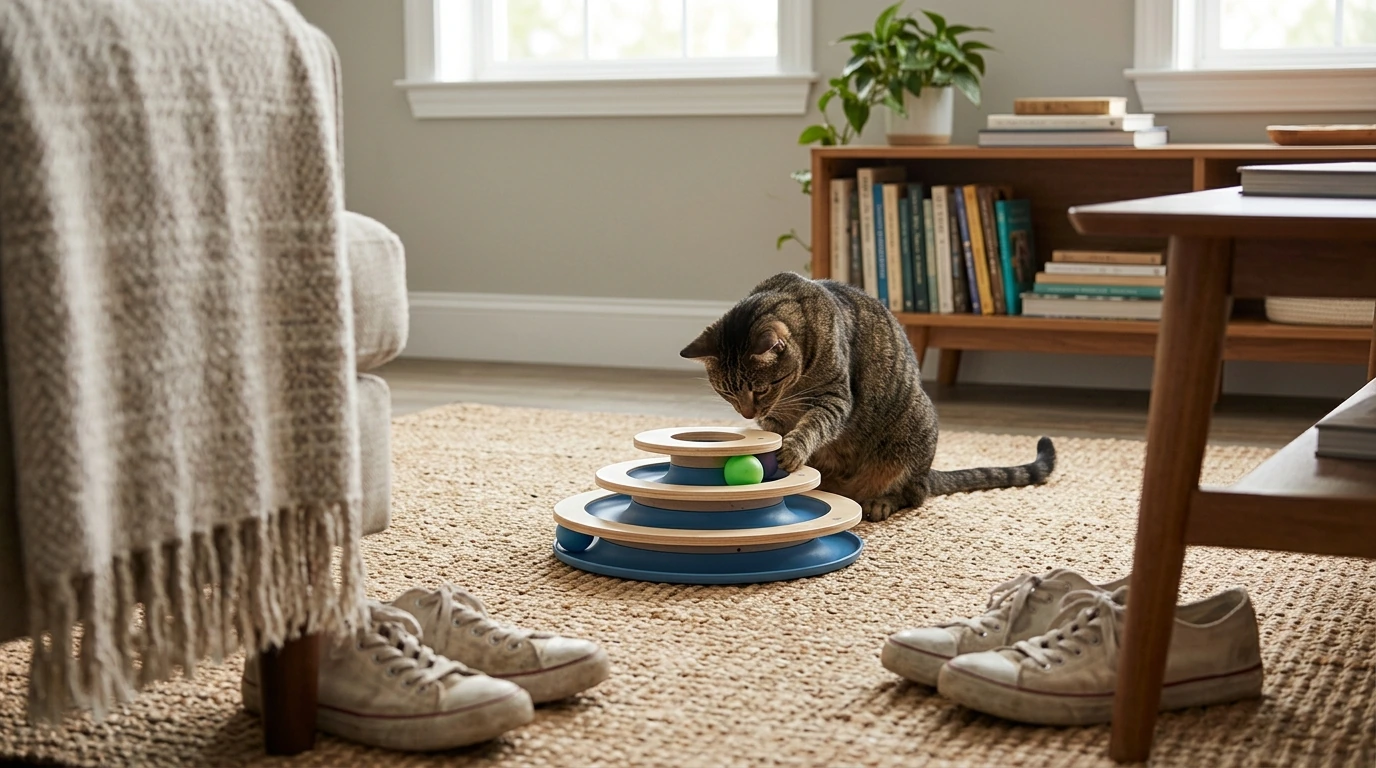
Enclosed track toys (a ball trapped in a circular track) are a classic “safe solo” option because there’s nothing to swallow and no dangling cords. They’re great for cats who like batting and chasing, and they work well on hard floors or low-pile carpet.
3) Kicker toys and plush prey (no strings)
Large kicker toys let cats bunny-kick and wrestle, which can burn energy fast. Look for tightly stitched fabric and skip anything with ribbons, feathers that pull out, or glued-on eyes. Catnip or silvervine versions can add interest without adding risk.
4) Durable chew-and-bat toys
Some cats like gnawing as much as chasing. Rubbery, cat-safe chew toys or firm-textured balls can satisfy that urge. The goal is a single-piece or securely assembled toy that won’t shed fragments.
5) Window entertainment plus “toy” enrichment
A stable window perch paired with a few toys nearby can be surprisingly effective. Add a rotating selection of solo toys and swap them every few days so the environment stays fresh without piling everything out at once.
For a simple rotation plan and more safety tips for leaving pets with solo toys, visit this guide to safe solo toys and a 3-2-1 rotation approach.
FAQ
How often should I rotate my cat’s toys?
Rotate every 2–4 days for most cats, keeping only a small selection out at once. This helps toys feel “new” again and can reduce boredom-related behaviors.














Leave a comment