Softening Hard Suede Shoes: Brush, Steam, Condition
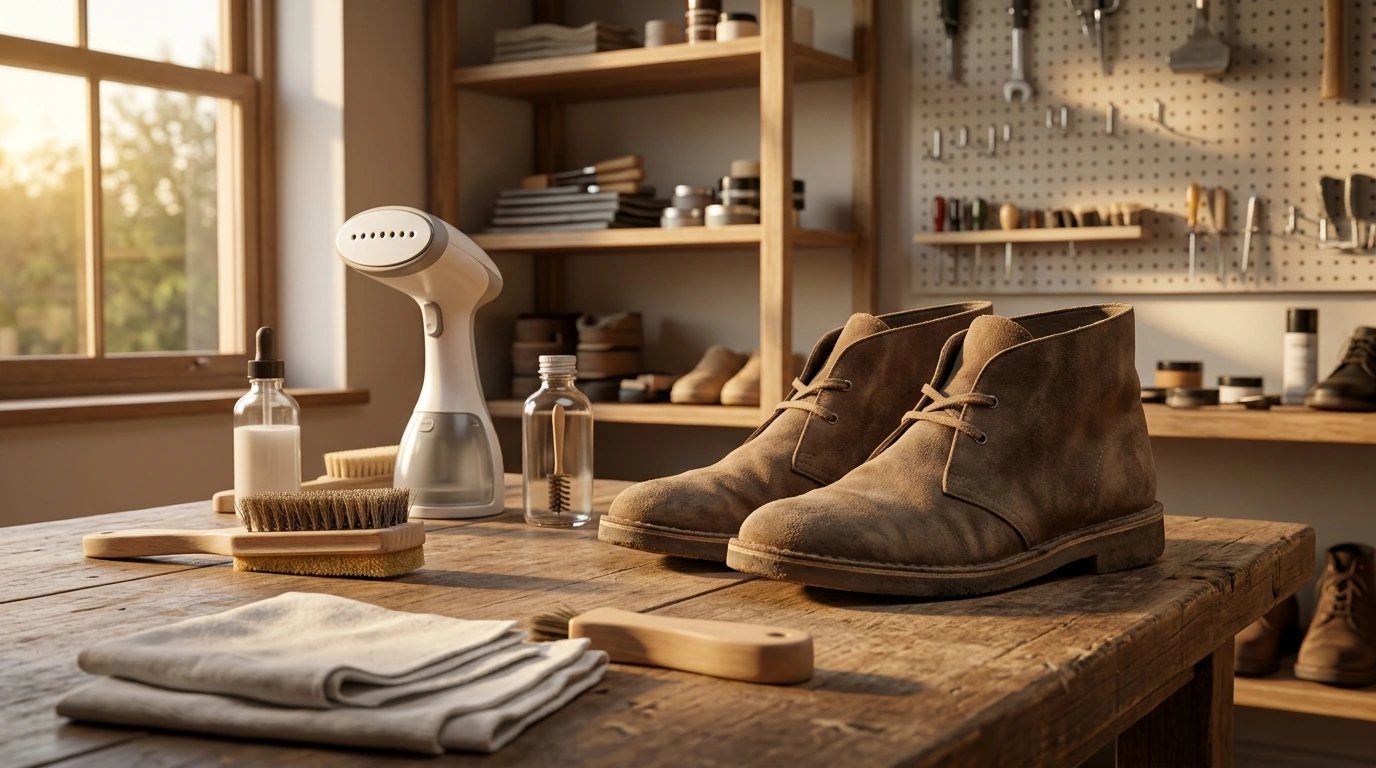
How to soften hard suede shoes?
Hard suede usually comes from dried-out fibers, salt or dirt buildup, or heat exposure. The goal is to relax the nap without soaking the leather or flattening it. Start with the least aggressive steps and stop once the suede feels flexible again.
Step 1: Brush to lift and loosen the fibers
Use a suede brush (or a clean, soft nylon brush) and make short, light strokes in one direction, then finish with gentle back-and-forth strokes on stiff areas. This breaks up compacted nap that can make suede feel boardy.
Step 2: Use low heat steam—carefully
Hold the shoe 6–10 inches from gentle steam (like a garment steamer or a kettle at a safe distance) for just a few seconds, then brush immediately. Do not saturate the suede; a little warmth and humidity is enough to soften the fibers.
Step 3: Work in a suede conditioner or renovator
If brushing and light steam aren’t enough, apply a suede/nubuck conditioner sparingly to the stiff panels (often the toe box and quarters). Let it dry fully, then brush again to restore the nap. Avoid oily leather creams—those can darken suede and leave it patchy.
Step 4: Flex and break them in the right way
After the shoes are dry, wear them indoors with thicker socks for short intervals. Flex the shoe gently with your hands at the ball of the foot (not by folding the toe upward). If the insole is stiff, swapping to a slightly cushioned insole can reduce the “hard” feel without stressing the suede.
When to stop (and what to avoid)
Once the suede bends easily and the nap looks even, stop adding moisture or product. Avoid soaking, hair dryers on high heat, and heavy waterproofing sprays used as “softeners,” which can make suede feel crunchy.
For more care and styling details on suede lace-ups, see the full guide here: https://marvellene.com/guide-calvin-klein-mens-suede-lace-up-shoes-style-care-guide/.
FAQ
How do you waterproof suede shoes without making them stiff?
Use a suede-specific protector in light, even coats and let each coat dry fully. Brush afterward to lift the nap; over-applying spray is what usually causes stiffness.












Leave a comment