Best Order to Pack a House for Moving (Room by Room)
In what order should I pack my house for moving?
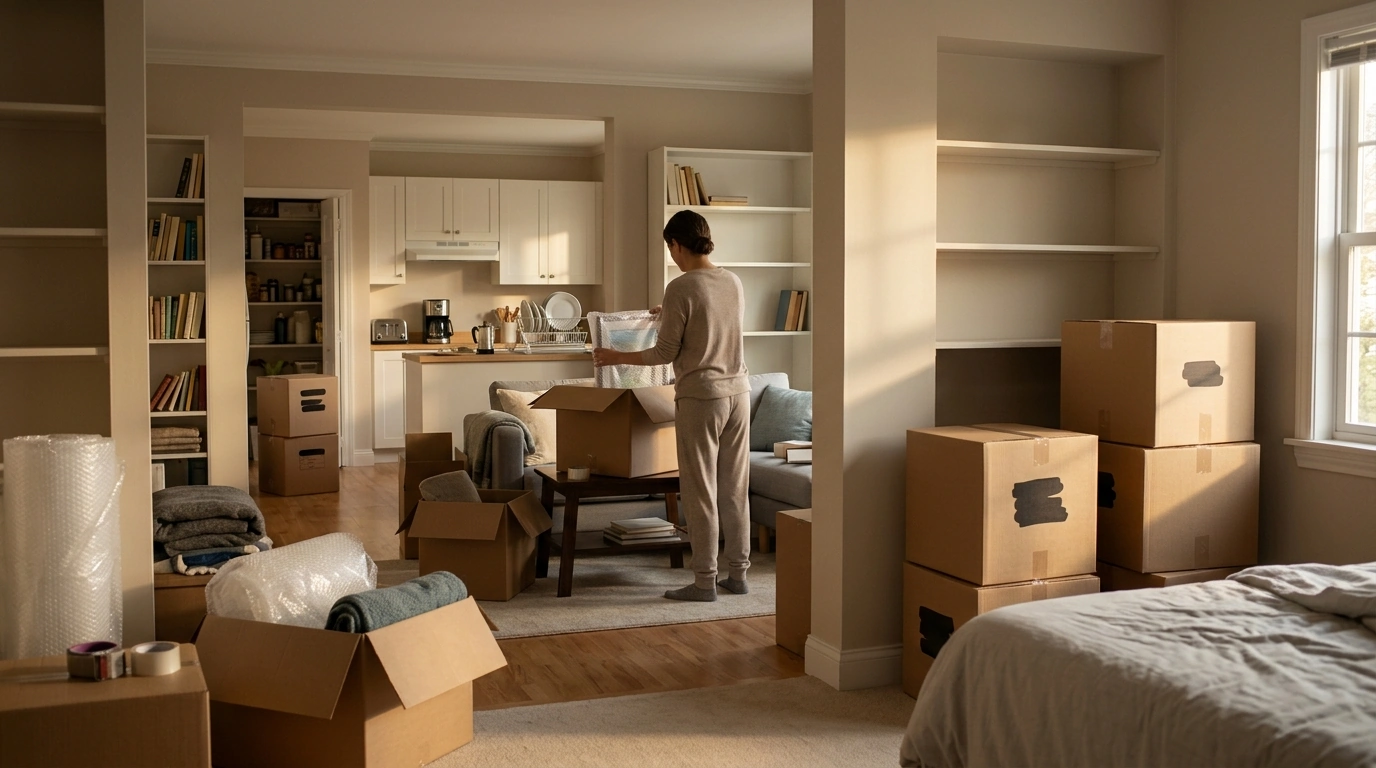
The easiest way to pack is to start with the things you use the least and end with the rooms you rely on every day. That keeps your routine intact while your packed boxes steadily stack up, and it reduces the chance you’ll tear open cartons looking for essentials.
Best packing order (from least-used to most-used)
1) Storage areas first
Begin with the basement, attic, garage, sheds, and spare closets. These spaces usually hold seasonal gear, extra tools, and “someday” items that won’t interrupt daily life. Group similar items together, label clearly, and set aside anything you’re ready to donate or toss before it ever reaches a box.
2) Guest rooms, formal spaces, and decor
Next, pack rooms that look nice but aren’t essential: guest bedrooms, dining rooms used occasionally, books, framed art, and decorative pieces. This is also the right time to pack off-season clothing, extra linens, and holiday items.
3) Secondary bathroom and laundry overflow
Pack backup toiletries, extra towels, and rarely used cleaning supplies. Keep a small “active” set of bathroom and laundry items out so you can function normally right up to move-out day.
4) Kitchen (non-essentials first)
Pack serving platters, specialty appliances, extra dishes, pantry duplicates, and seldom-used gadgets. Leave out a basic “kitchen kit” (a few plates, cups, utensils, one pan, coffee maker) for the final days, then pack it last.
5) Bedrooms (except the last-night setup)
Pack out-of-season clothes, extra shoes, and anything not needed weekly. Leave one suitcase or tote per person for the final week, plus bedding for the last night.
6) Living room and daily-use items last
Finish with the items you touch every day: main TV setup, everyday books/toys, and frequently used electronics. Pack chargers and remotes together, and label those boxes as “Open First.”
For a simple, time-boxed approach that pairs decluttering with packing, follow this 6-week declutter-before-moving plan and pack as you streamline.
FAQ
What should I declutter before I start packing?
Start with duplicates, broken items, clothes you don’t wear, and anything you wouldn’t pay to move. Focus on storage areas first since they tend to hide the most “easy decision” clutter.












Leave a comment