Declutter Before Moving: 6-Week Plan for a Calmer Move
Why decluttering before moving changes everything
Decluttering before you pack is the fastest way to make a move feel simpler. When you reduce what you own, you reduce what you have to wrap, lift, label, and pay to transport—especially if your quote is based on weight, cubic feet, or hourly labor.
A smaller home inventory also makes setup easier on the other end. Fewer boxes means clearer labeling, faster “where is it?” answers, and less time spent hunting for essentials. Most importantly, early decisions prevent last-minute panic packing—the kind that turns random clutter into expensive “junk boxes” you’ll unpack later with regret. Decluttering also reveals what truly needs replacing or repairing (like missing cords, cracked bins, or worn linens) while you still have time to handle it calmly.
A stress-light decluttering mindset that prevents backtracking
The goal isn’t perfection; it’s a move that supports your next season of life. Try the “useful, loved, or necessary” filter. If an item doesn’t help with current routines, isn’t genuinely enjoyed, and won’t be needed soon, it’s a strong candidate to let go.
It also helps to separate identity from objects. Keeping something because it was expensive, gifted, or tied to an old version of you often leads to transporting guilt, not value. Speed up decisions with a few simple rules: duplicates, expired items, broken items, never-used items, and items that don’t fit (your body or your life) are easy wins.
Finally, set boundaries that protect your energy: one donation bag per day, one shelf per session, or a 20-minute sprint. You’ll build momentum without burning out.
Set up your decluttering stations (10 minutes, no drama)
Before you start pulling items out, set up five simple zones: Keep, Donate, Sell, Recycle, and Trash. This prevents the classic trap of “sorting” that quietly becomes reorganizing the same clutter.
Add one more container: a Relocate bin. When something belongs in another room, drop it there and keep moving. You can do a quick relocate sweep at the end of the session.
Prep supplies so you don’t stall: trash bags, sticky notes, a marker, and a small box for batteries/cords/odd parts. Then decide your drop-off plan now—donation hours, pickup scheduling, and local recycling rules—so bags don’t linger for weeks. For hazardous household materials, consult your local guidelines and the EPA’s household hazardous waste overview: https://www.epa.gov/hw/household-hazardous-waste-hhw.
Timeline plan: what to declutter and when
Start with low-sentiment areas to build confidence: bathroom, pantry, laundry. You’ll clear space quickly and see immediate results. Next, tackle high-volume zones—clothes, books, and kitchen gadgets—to reduce boxes and packing supplies. Save sentimental categories (photos, keepsakes) for later, and time-box them so they don’t swallow the schedule.
A useful reality check is the “packing preview” question: Would I pay to move this? If the answer is no, it’s probably time to donate, recycle, or toss.
| When | Focus areas | Goal | Quick win |
|---|---|---|---|
| 4–6 weeks out | Pantry, bathroom, laundry | Remove expired and low-value items | Bag donations immediately |
| 3–4 weeks out | Closets, shoes, books, décor | Reduce volume by 25–50% | Create a “maybe” box with a 48-hour deadline |
| 2–3 weeks out | Kitchen tools, linens, storage areas | Keep only what fits the new space and routines | Pack a “starter kitchen” box and donate duplicates |
| 1–2 weeks out | Paperwork, cables, miscellaneous drawers | Prevent last-minute junk boxes | Label cords and recycle dead electronics properly |
| Final week | Keepsakes, last drawers, cleaning supplies | Finish decisions and pack essentials | Set aside donation bags for same-day drop-off |
Room-by-room decisions that keep the process moving
Kitchen
Bedroom and closet
Living areas
Bathroom
Kids’ items
Garage and storage
What to do with items you’re not keeping (without creating new stress)
Donate: Choose one charity and verify what they accept to avoid frustrating return trips. If you plan to itemize deductions, review the IRS guidance on charitable contributions: https://www.irs.gov/charities-non-profits/charitable-organizations/charitable-contribution-deductions.
Pack smarter after decluttering: minimalist move essentials
Don’t forget the admin side of moving: scheduling mail forwarding early can prevent missed bills and subscriptions. Use the official USPS change-of-address page: https://www.usps.com/manage/forward.htm.
A guided approach for staying consistent from first purge to moving day
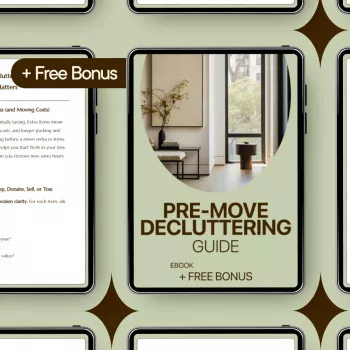
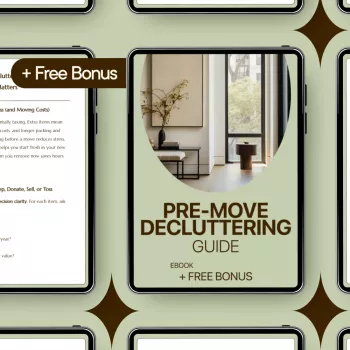
If you’d like a step-by-step framework with prompts and a realistic timeline, the Pre-Move Decluttering Guide eBook is designed to keep sessions short, focused, and finishable. For homes with pets, shedding can also add hidden “stuff” (lint rollers, extra throws, vacuum parts). The Simple Ways to Control Pet Hair at Home (digital guide) pairs well with pre-move cleaning and reduces what you feel you need to haul along “just in case.”
FAQ
How far in advance should decluttering start before a move?
For most households, starting 4–6 weeks before moving day gives enough time to make clear decisions without cramming. If your move is last-minute, begin with low-sentiment areas (pantry, bathroom, laundry), then tackle high-volume categories like clothing and kitchen gadgets.
What should never be packed or moved to a new home?
Skip expired food and medications, leaking chemicals, recalled or unsafe items, broken appliances you don’t plan to fix, and heavy duplicates you don’t use. Hazardous materials (paint, propane cylinders, certain cleaners) should follow local disposal rules instead of being transported.
How do you declutter sentimental items without regret?
Time-box the session and set a clear limit, like one memory bin per person. Keep representative pieces you’ll display or use, photograph the rest for the memory, and let decisions be based on today’s life—not guilt from the past.















Leave a comment