Executive Swivel Chair with Footrest: Ergonomic Luxury
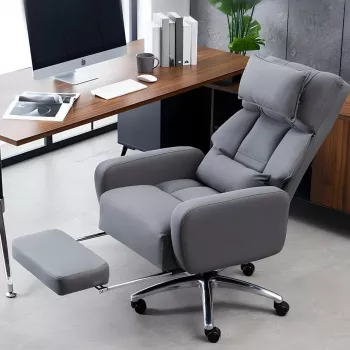
Luxury Swivel Executive Chair with Footrest and Ergonomic Design
A premium executive chair can change the entire feel of a workday—especially when long sessions demand both posture support and the option to fully decompress. The difference shows up in the details: how the backrest follows your natural spine curve, whether the recline stays stable under load, and if the footrest is built for real relaxation rather than occasional novelty. Below is a practical guide to the features that help a chair feel comfortable in hour six, not just minute one.
What makes a chair feel truly executive
An “executive” chair isn’t just a taller silhouette. The best models combine a confident, high-back profile with functional ergonomics and smooth day-to-day control.
- Ergonomic shaping: Support should follow the spine’s natural curve instead of locking you into a rigid posture.
- High-back stability: Upper-back and shoulder support helps maintain focus during long stretches of typing, calls, and review work.
- Swivel and rolling performance: Rotation and rolling should stay consistent across common floor types without grabbing or wobbling.
- Clean recline transitions: Moving from task mode to rest mode should feel predictable—no sudden drops or creaks.
- A footrest that’s truly supportive: It should extend smoothly, feel secure at typical recline angles, and support leg weight comfortably.
Ergonomic design that supports long sessions
Comfort isn’t only about softness. It’s about fit, pressure distribution, and the ability to make small posture changes throughout the day. If you’ve ever felt fine at first and then progressively stiff or sore, these are the areas to prioritize.
- Lumbar support: Look for consistent lower-back contact while upright and while reclined. Good lumbar support reduces the urge to slump.
- Seat depth and edge comfort: A supportive cushion plus a gentler front edge can reduce pressure behind the knees and help circulation.
- Backrest contour: Mid-back and shoulder zones should feel held up without pushing your head forward or rounding your shoulders.
- Arm support: Armrests should reduce shoulder tension while typing and using a mouse—without forcing elbows outward.
- Movement matters: A responsive recline encourages micro-movements, which can help reduce stiffness over long days.
For workstation fundamentals that support healthy posture and equipment placement, review guidance from the OSHA Computer Workstations eTool and the Mayo Clinic office ergonomics guide.
Footrest comfort: when it helps and how to use it well
A built-in footrest can be a genuine quality-of-life feature when it’s used the right way. Think of it as a recovery tool—ideal for brief resets—rather than a default typing posture.
- Best for short recovery breaks: Reclining with your feet supported can relieve leg fatigue after long focus blocks.
- Helpful for circulation: Brief leg elevation often feels relieving after extended sitting.
- Positioning tip: Keep hips supported in the seat and avoid sliding forward to “reach” the footrest. Sliding reduces lumbar contact.
- Work mode vs. rest mode: For desk work, feet are typically best on the floor (or a low foot platform). Use the footrest mainly during recline.
- Stability check: The footrest should extend/retract smoothly and feel secure at common recline angles.
For broader context on reducing strain and musculoskeletal risk factors, the NIOSH ergonomics overview is a helpful reference.
Materials, build quality, and daily feel
Two chairs can look similarly “luxury,” yet feel completely different after weeks of use. Materials and construction determine whether the chair stays supportive, quiet, and stable.
- Upholstery comfort: Premium surfaces should feel smooth and comfortable without trapping heat excessively during long sessions.
- Cushioning resilience: Supportive foam resists bottoming out and helps the seat keep its shape month after month.
- Frame and base: A sturdy base reduces wobble while swiveling and reclining, which matters for both comfort and confidence.
- Casters and flooring match: The right casters prevent drag on carpet and reduce scuffs on hard flooring.
- Finish details: Clean stitching, aligned panels, and tidy edge binding often signal attention to durability.
Quick reference: comfort and feature checklist
Use the checklist below to evaluate fit at a glance before committing to a premium chair. If a feature isn’t adjustable, confirm it matches your proportions and desk setup—especially lumbar feel, seat comfort, and recline stability.
| Category | What to check | Why it matters |
|---|---|---|
| Lumbar support | Lower back stays supported upright and reclined | Reduces slouching and fatigue |
| Seat comfort | No pressure points; supportive cushioning | Helps maintain comfort over long sessions |
| Seat depth/height | Thighs supported; feet rest comfortably | Improves circulation and posture |
| Arm support | Elbows supported without raising shoulders | Reduces neck and shoulder tension |
| Recline/tilt | Smooth transition; stable lock or tension control | Enables movement and rest breaks |
| Footrest | Secure extension; comfortable leg support | Improves relaxation during recline |
| Swivel/casters | Smooth roll and rotation | Eases reaching, reduces twisting strain |
| Build stability | Minimal wobble; sturdy base | Confidence and long-term durability |
Setup tips and care for long-term performance
Luxury Swivel Executive Chair with Footrest and Ergonomic Design: who it suits best
In-stock picks to complete the workspace
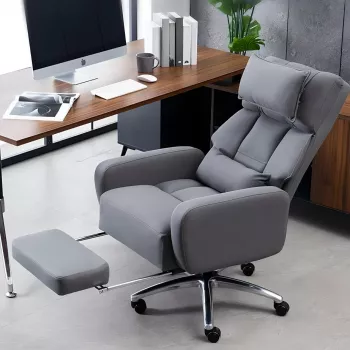
- Luxury Swivel Executive Chair with Footrest and Ergonomic Design
- Metal Wall Art for Living Room & Restaurant
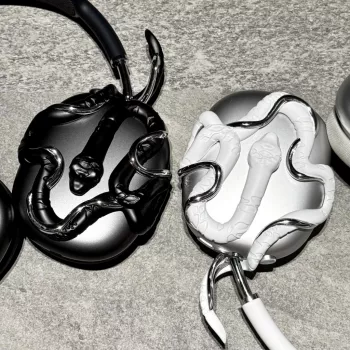
- 3D Resin AirPods Max Case Alien Snake Design
FAQ
Which ergonomic chair with footrest is the best?
The best option is the one that fits your body and desk: consistent lumbar contact, comfortable seat depth and height, a stable recline, and a footrest that feels secure while supporting your legs. Prioritize adjustability and stability so comfort holds up across long sessions.














Leave a comment