What Is Desensitization in Dog Training? A Guide
What is desensitization in dog training?
Desensitization is a gradual training process that helps your dog become more comfortable with something they find worrying or exciting. You begin with a version of the trigger that your dog can notice without becoming overwhelmed, then slowly increase the challenge as they remain relaxed.
A trigger might be another dog, a vacuum cleaner, a visitor, or a sound. The goal is not to make your dog endure the scary thing until they give up reacting. It is to give them manageable experiences that build confidence over time.
How do you practice desensitization?
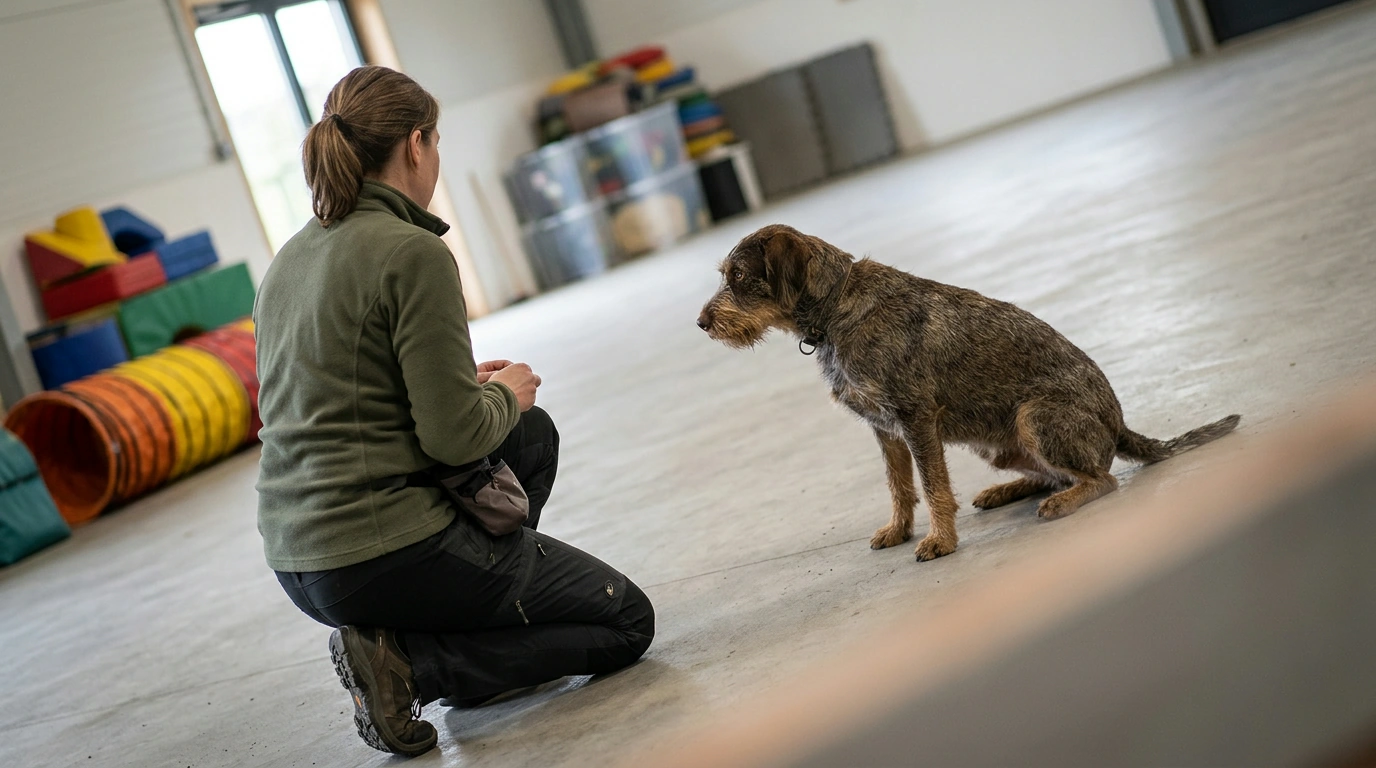
Start by identifying a distance, volume, or intensity at which your dog notices the trigger but can still take treats, respond to you, and move comfortably. For a dog who worries about other dogs, that might mean watching one from across a quiet park.
Keep the first sessions short. If your dog stays relaxed, you can gradually make the trigger more noticeable in later sessions, such as by moving a little closer. If they bark, freeze, pull away, or refuse food, increase the distance or reduce the intensity and give them a break.
Progress is rarely a straight line. Your dog may handle a familiar trigger well one day and need more space the next. Adjust the exercise to the dog in front of you rather than following a fixed timetable.
How is desensitization different from counterconditioning?
Desensitization controls how much of a trigger your dog experiences. Counterconditioning pairs that trigger with something your dog enjoys, often a small, tasty treat, to help change how they feel about it.
Our team recommends using the two together: when your dog notices the trigger at a comfortable intensity, offer a treat. When the trigger goes away, stop offering treats. Keep enough distance that your dog can eat without feeling pressured.
What equipment can help?
A well-fitting harness and a standard leash can help you maintain control while giving your dog room to move. A treat pouch keeps rewards handy, and small, soft treats are easy to deliver quickly. Avoid forcing your dog toward a trigger or using corrections for fearful reactions.
For more ways to build confidence gradually, explore our socialization ladder for calm, confident pets.
FAQ
When should you get professional help for a reactive dog?
Seek help from a qualified, reward-based trainer or veterinary behaviorist if your dog’s reactions are intense, getting worse, or creating a safety risk. Your veterinarian can also check for pain or other health issues that may affect behavior.















Leave a comment