Stainless Steel Trash Can: Worth It for Your Home?
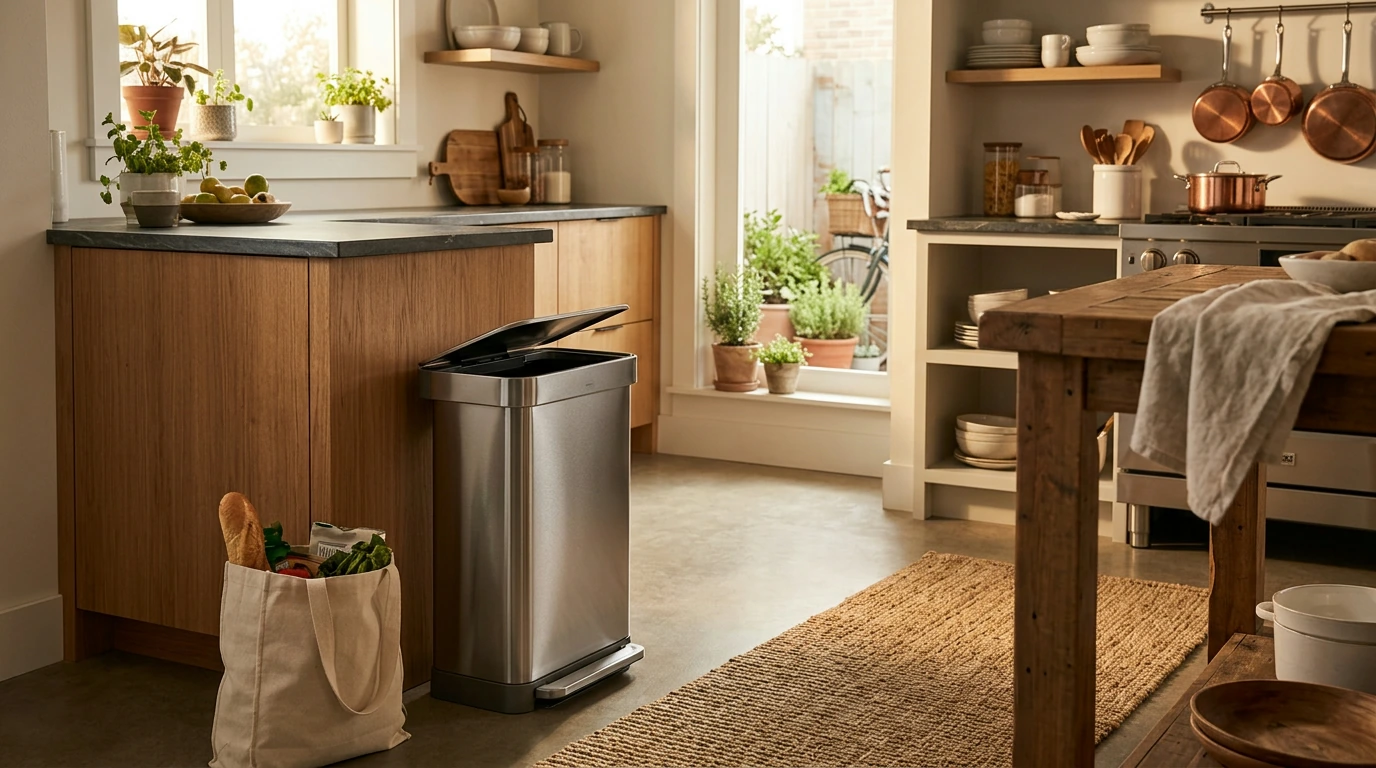
Should you get a stainless steel trash can?
If your trash can sits out in the open—especially in a kitchen—stainless steel is usually a smart upgrade. It looks clean and intentional, holds up well to daily bumps, and is easy to wipe down when fingerprints or splashes happen. Our team also likes stainless for busy households because it tends to feel sturdier than lightweight plastic options.
When stainless steel is the right move
You want a cleaner look in high-traffic spaces
Stainless steel blends into modern, traditional, and minimalist rooms without looking “utility-only.” In a kitchen, office, or bedroom corner, it helps the space feel more put-together—without needing to hide the bin.
You value durability and stability
A well-built stainless can is less likely to tip when you toss something one-handed, and it typically resists cracking over time. If you empty trash frequently or have kids at home, that sturdiness can make day-to-day use smoother.
You prefer easier wipe-downs
With a damp cloth and mild cleaner, stainless exteriors clean up fast. For less visible smudging, consider a brushed finish and avoid abrasive scrubbers that can dull the surface.
What to check before you buy
Focus on usability features you’ll notice daily: a quiet, smooth pedal; a lid that closes fully; and a removable inner bucket to prevent messy bag changes. For kitchens, a rectangular shape often saves floor space against cabinets, while a 13-gallon size suits many households. For a deeper walkthrough on picking the right size and style, read our guide: rectangular stainless steel trash can guide.
When plastic might be better
If the can will live in a garage, workshop, or kids’ playroom, plastic can be lighter, cheaper, and less prone to visible dents. Plastic is also a practical choice when you need multiple bins for sorting or you expect heavy scuffing.
FAQ
Are steel trash cans better than plastic?
Steel trash cans are often sturdier, more stable, and better-looking in visible rooms, and they wipe down easily. Plastic can be lighter, less expensive, and a better fit for rough-use areas where scuffs don’t matter.
What is the best 13-gallon stainless steel trash can?
The best one is a 13-gallon can with a reliable foot pedal, a tight-sealing lid, and a removable inner bucket for cleaner bag changes. A rectangular footprint is also a strong choice if you want it to sit neatly against cabinets.
Why are stainless steel garbage cans so expensive?
Stainless models often cost more because of higher material costs and added components like soft-close lids, reinforced hinges, and inner buckets. Better finishes and heavier construction can also raise the price while improving everyday durability.
















Leave a comment