Dry Bedroom Air? Stop Waking With Dry Mouth
How can I stop waking up with a dry mouth if my bedroom air is dry?
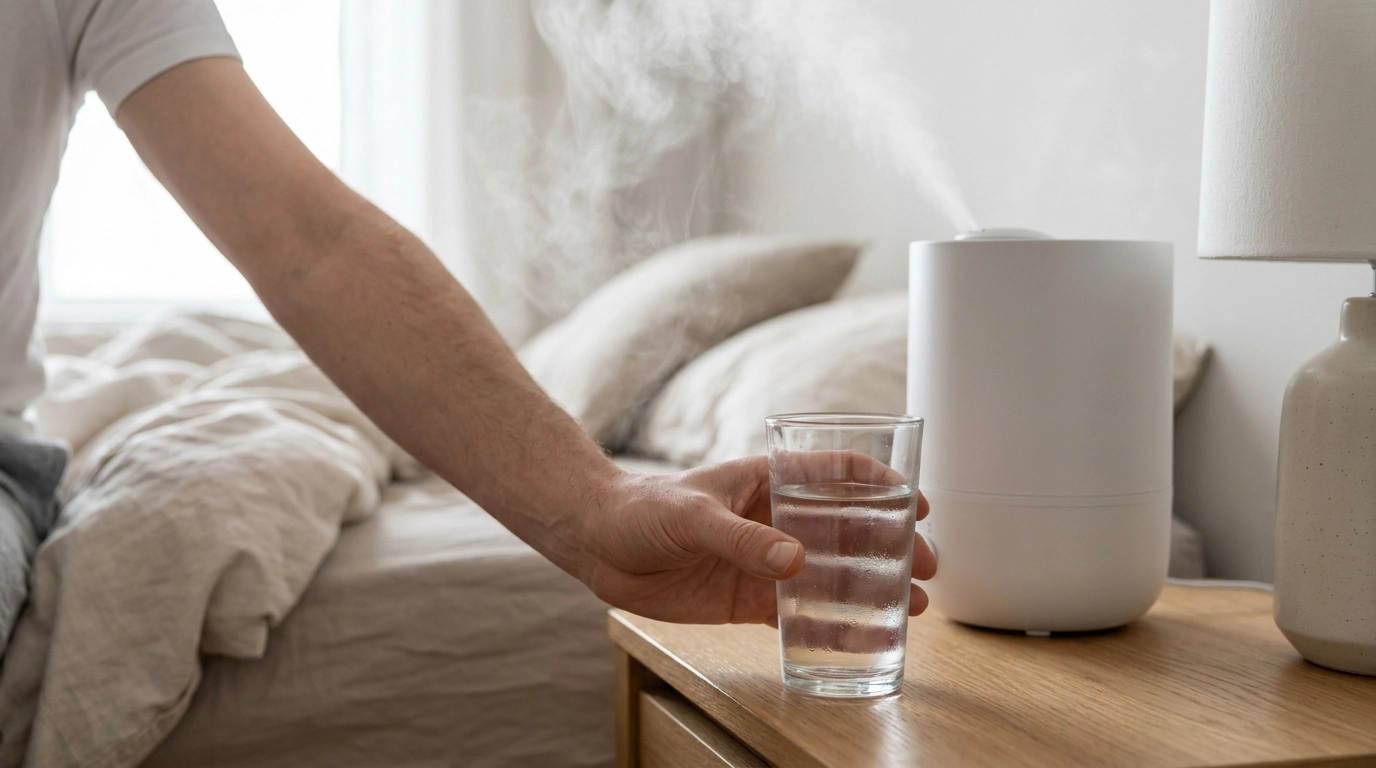
When the air in your bedroom is dry, moisture evaporates faster from your mouth and throat while you sleep—especially if you breathe through your mouth, snore, or sleep with your lips slightly open. The goal is to add moisture back to the room, protect your mouth overnight, and reduce anything that worsens dehydration.
Use a humidifier the right way
Run a cool-mist humidifier near (not right next to) your bed and aim for a comfortable indoor humidity level—often around 40–50%. Clean it regularly so it doesn’t blow irritants that can worsen congestion and mouth breathing.
Support nasal breathing before bed
If a stuffy nose is forcing mouth breathing, try a saline spray or rinse and a warm shower to loosen dryness and mucus. Sleeping slightly elevated can also reduce congestion for some people, making nasal breathing easier.
Hydrate earlier, not just at midnight
Drink water throughout the day and in the evening, but avoid chugging a large amount right before bed if it makes you wake up to use the bathroom. Limit alcohol late in the day, and go easy on caffeine in the afternoon since both can contribute to dehydration and dryness.
Reduce drying triggers in your room
Skip direct airflow from fans or heating vents pointed at your face. If you use a space heater, pair it with a humidifier since heat often dries the air quickly. Consider keeping the bedroom door closed to maintain a steadier humidity level.
Try overnight moisture support
For stubborn dryness, saliva substitutes, moisturizing mouth sprays, or dry-mouth lozenges designed for nighttime can help your mouth stay comfortable until morning. If you suspect medication side effects or ongoing snoring/sleep apnea, getting the root cause checked can make a bigger difference than any quick fix.
For a step-by-step nighttime routine and faster relief options, see the full guide: How to Stop Dry Mouth: Quick Relief, Night Routine & Daily Habits.
FAQ
What drinks or foods help with dry mouth before bed?
Water is best, and water-rich foods like cucumber or melon can help without being irritating. Avoid alcohol, very salty snacks, and acidic juices close to bedtime since they can worsen dryness or discomfort.















Leave a comment