Best Night Light Color for Dogs: Red, Amber, or Dark
What color light is best for dogs to sleep at night?
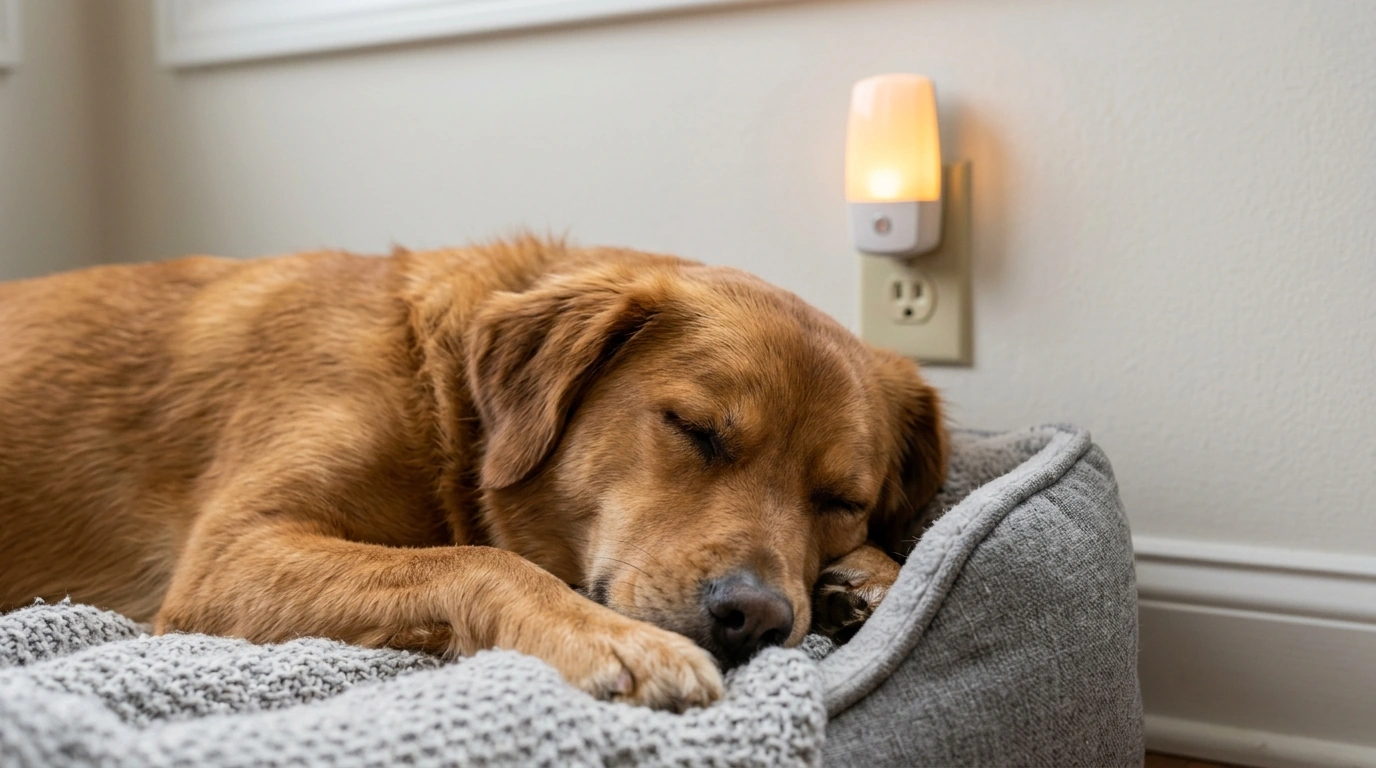
For most dogs, the best light for sleeping at night is no light at all. Darkness supports normal melatonin rhythms and helps your dog settle without extra stimulation. If you need a night light for safety, choose a very dim red or amber light and keep it pointed away from your dog’s bed area.
Why dim red/amber tends to work best
Dogs are sensitive to light changes at night, and brighter or cooler-toned lights can signal “it’s time to be alert.” A low-intensity red or amber glow is less likely to feel like daylight and is typically the least disruptive option when some visibility is necessary (for stairs, hallways, or checking on a puppy).
Colors to avoid for better sleep
Avoid bright white or blue-tinted lights at night. Cool, bluish light can appear harsher and may encourage wakefulness. Even if a bulb is labeled “soft white,” check that it isn’t overly bright—brightness matters as much as color.
How to set up nighttime lighting for a calmer dog
Keep the room as dark as practical, and use the lowest lumen setting you can. Place the light low to the ground, shield it so it doesn’t shine directly into your dog’s eyes, and keep it consistent—frequent on/off changes can prompt your dog to look around, pace, or check noises.
When light sensitivity might signal stress
If your dog seems restless, startles easily, or can’t settle even in darkness, the issue may be anxiety or misread cues rather than lighting alone. Learning to interpret body language—like tension, scanning, or repeated lip-licking—can help you respond appropriately. For a helpful refresher, visit this guide to dog body language signals.
FAQ
Should I leave a night light on for my dog?
Only if it’s needed for safety or caregiving. If you do, choose a very dim red/amber light and keep the area around your dog’s sleeping spot as dark and steady as possible.












Leave a comment